Assassin’s Creed Shadows – Review
Reviewed by Karan Parmar | March 20, 2025
Assassin’s Creed Shadows brings Ubisoft’s long-running franchise to feudal Japan at last, a setting fans have clamored for over a decade. But while the game delivers stunning visuals, dual protagonists, and a mix of stealth and open combat, it’s also a deeply conflicted experience. One foot planted in new territory, the other chained to old formulas. It’s bold, beautiful, and ambitious, but not always cohesive.
Story – Two Paths Through a Fractured Land
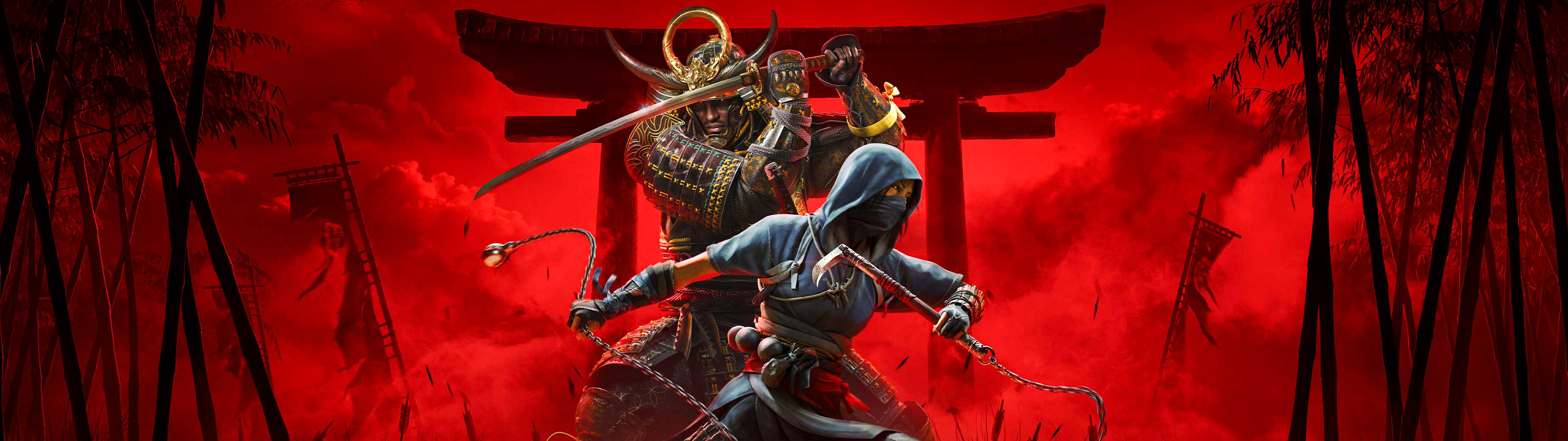
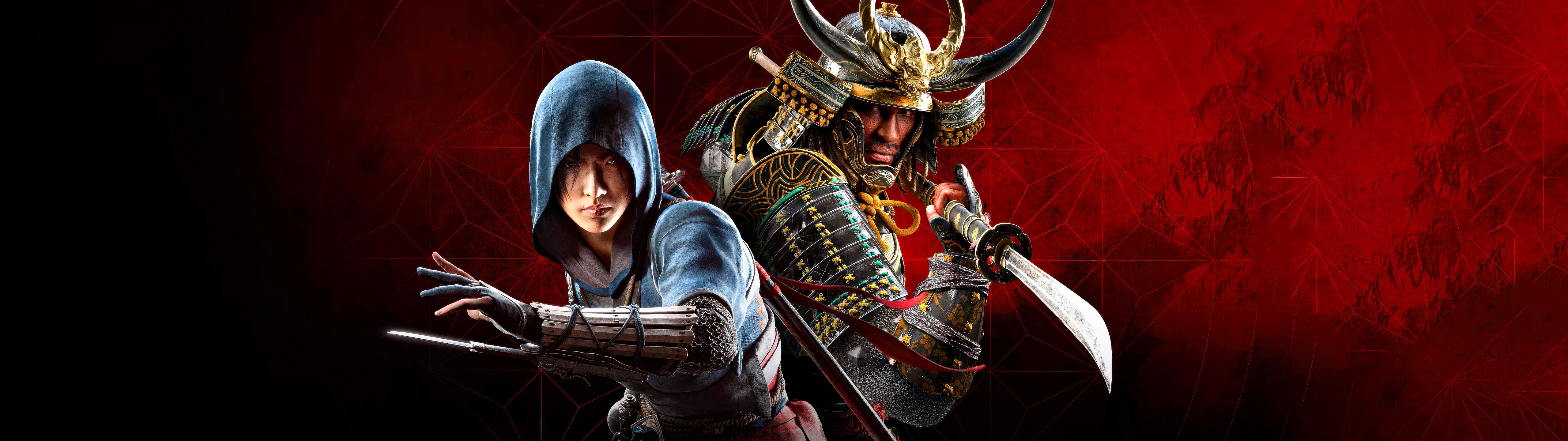
Shadows sets its tale during the late Sengoku period, a time of violent upheaval, shifting alliances, and encroaching foreign influence. You play as two protagonists: Naoe, a nimble shinobi from the shadows, and Yasuke, a powerful African samurai based on the real historical figure. It’s a bold narrative pairing that tries to explore two opposing approaches to justice, duty, and identity.
Naoe’s arc leans into revenge and legacy. Her father’s death at the hands of corrupt warlords pushes her into the life of a hidden blade. Her story is a classic Assassin’s Creed family tragedy, a thirst for justice, and an underground brotherhood shaping the world from the dark.
Yasuke’s journey is quieter but more grounded. As a former servant who earns his place as a warrior, his tale is about finding belonging in a land that sees him as an outsider. It’s rare for a major game to center a Black protagonist in historical Japan, and while his narrative doesn’t shy away from that tension, it also doesn’t sensationalize it.
The larger narrative threads, Templars, hidden blades, and artifacts, return, but they’re handled with a slightly lighter touch here. There’s more room for personal arcs to breathe. While some moments feel formulaic or underwritten, particularly in how missions are structured, the dual perspective does add nuance to the usual Assassins-vs-Templars framework.
Characters – Two Leads, One Uneven Spotlight

Yasuke is easily the standout. His calm presence, imposing stature, and deliberate combat style give him weight. He’s portrayed with respect and complexity, avoiding caricature. His performance is subtle, mature, and emotionally resonant.
Naoe gets a compelling backstory but is underserved by uneven pacing. Her missions lean heavily on stealth, yet her character development feels more rushed. The emotional beats land, but not always with the impact they should. Still, her interactions with the Brotherhood and her evolving moral compass are highlights.
Supporting characters like Lord Oda, foreign traders, rogue assassins, and clan leaders populate the world but rarely leave a lasting mark. There’s little time spent deepening these relationships, and too many NPCs feel like historical bullet points rather than people with real stakes.
The voice acting overall is strong, especially in the Japanese dub. Facial animations can be hit-or-miss, with some expressions lacking the nuance needed for dramatic moment
World Design – Breathtaking Yet Bound by Familiarity

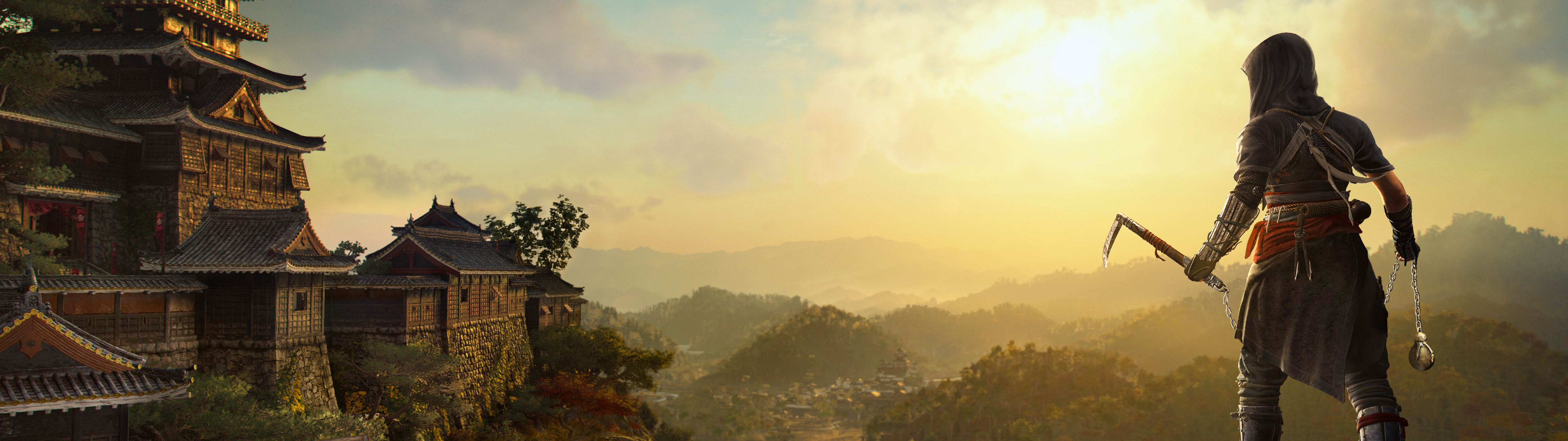
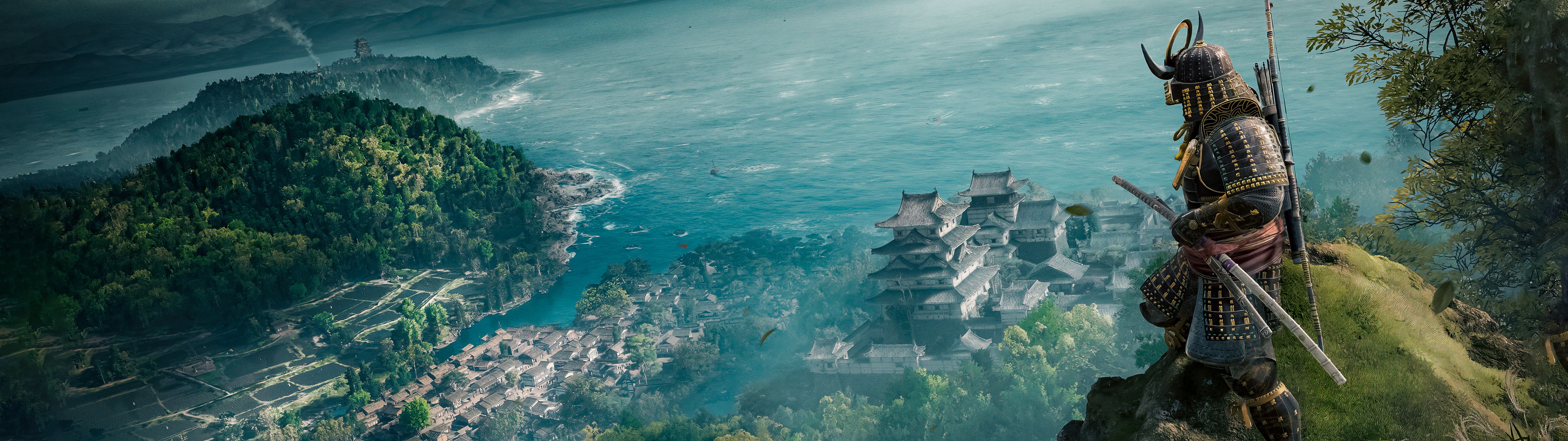
Feudal Japan is a visual feast of golden rice fields, snow-covered shrines, cherry blossom groves, and war-torn castles. Ubisoft’s artists have created one of the most beautiful Assassin’s Creed worlds to date. From the verticality of mountain temples to the shadowy corridors of Kyoto, the atmosphere is thick with period detail.
Dynamic weather and a full day-night cycle play a major role. Stealth missions feel different depending on whether you’re stalking enemies through misty dawn or heavy rain. Seasonal changes also affect the landscape visually and tonally.
The aesthetics are fresh, but the structure is still mostly formulaic. Climb the tower. Sync the view. Clear the bandit camp. Repeat. The open world is filled with content, but not always with meaning. Random patrols, collectibles, and side quests are plentiful, yet they rarely feel urgent or narratively rich.
Still, there are moments of brilliance: unmarked encounters with ronin, quiet duels by candlelight, and hidden shrines tucked behind waterfalls. When it slows down and lets you soak in the world, Shadows feels alive.
Combat and Mechanics – Style Over Substance, But Solid Core
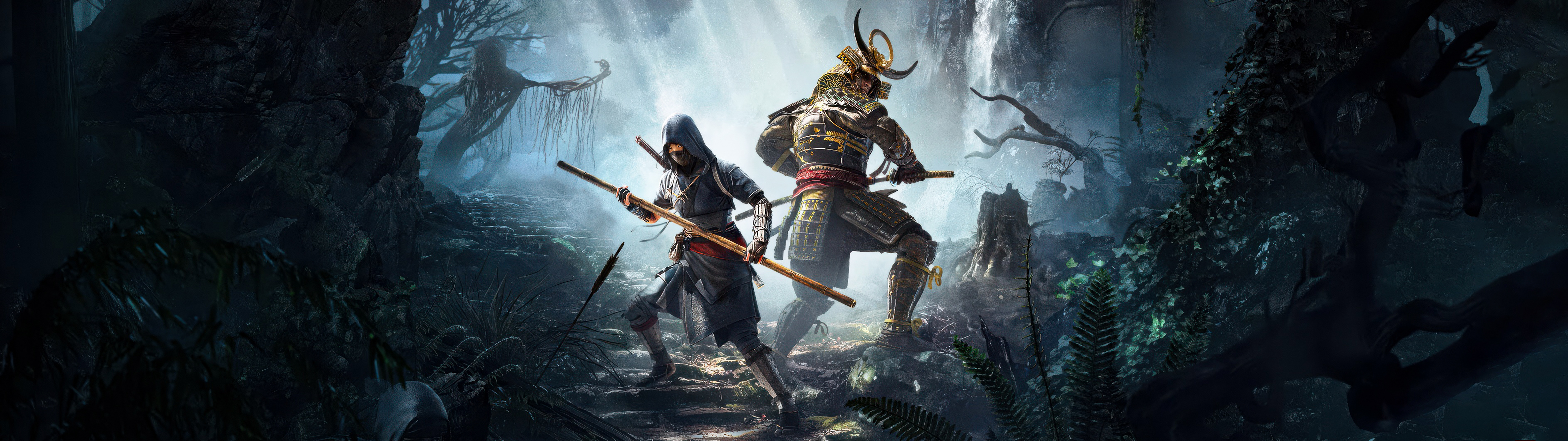
Combat differs dramatically between Naoe and Yasuke, and this duality is where Shadows finds its best mechanical identity.
Yasuke is a tank; every swing of his kanabo or katana hits hard, with loud, satisfying weight. His fights feel brutal, with heavy parries and armor-breaking strikes. He can stand toe-to-toe with multiple enemies and come out on top.
Naoe, on the other hand, is all finesse. She uses short blades, kunai, smoke bombs, and distraction tools. Her strength is in evasion, silent takedowns, and parkour infiltration. She’s a callback to classic Assassin’s Creed stealth, with new additions like prone movement and wall-hugging shadows that make her approach feel viable again.
Combat animations are gorgeous, but AI remains inconsistent. Some enemies are aggressive and reactive, while others stand idle during chaos. Boss fights are underwhelming, often relying on pattern recognition rather than meaningful challenge.
Progression is split between the two leads. Separate skill trees, gear upgrades, and weapons encourage investing time in both characters. There’s no loot bloat, gear feels curated rather than random, and upgrading weapons or armor has tangible benefits.
Stealth and Detection – Finally a Step Forward

For longtime fans, this is the best stealth system in the series since Unity. Light and shadow matter. Line of sight and noise levels are crucial. Enemies respond to footprints, noises, and even changes in the environment if you’re smart enough to manipulate them.
Tools like bamboo darts, grappling hooks, and environmental traps add layers to your approach. You can now extinguish lanterns, crawl through ponds, or create diversions using wildlife. It’s not revolutionary, but it’s finally functional and enjoyable again.
Detection systems are still a little forgiving at times, but at least the game rewards players who want to play like a true assassin instead of just a brawler in a hood.
Quests and Side Content – Quantity Over Quality
The main narrative missions are mostly strong, but the side quests are a mixed bag. Some delve into folklore, local legends, and small character arcs that genuinely enrich the world. Others feel copy-pasted or disconnected from the setting. Too many follow the “go here, kill this, loot that” formula without emotional weight.
Faction-based missions offer variety working for monks, local resistance, or corrupt samurai, but these rarely develop into compelling arcs. They’re functional but forgettable. Exploration is occasionally rewarded with powerful gear, hidden lore scrolls, or environmental storytelling, which softens the bloat.
Audio Design – Immersive, Subtle, and Period-Accurate
The soundscape of Shadows is rich. You hear distant shamisen music drifting from teahouses, the chirping of cicadas in bamboo forests, and the shrill clash of steel on steel. Rain sounds different depending on the surface. Every footstep on gravel, snow, or wooden floorboards is distinct.
Combat is loud and weighty. Stealth is quiet and tense. Silence plays a big role, especially during night missions, where the ambient noise can feel as oppressive as a full orchestra.
The score blends traditional Japanese instrumentation with modern cinematic swells. It doesn’t try to overpower the mood, just enhance it. In key moments, especially during dramatic duels or emotional cutscenes, it hits the mark.
Conclusion – A Gorgeous, Often Inspired, But Uneven Leap
Assassin’s Creed Shadows is a welcome return to focused stealth, thoughtful storytelling, and atmospheric worldbuilding. It finally gives fans the Japanese setting they’ve dreamed of, complete with samurai duels, hidden blades, and moral ambiguity. But it also carries the weight of an aging formula. Too many systems feel lifted from older entries without enough refinement. Some open-world bloat remains. And while the dual protagonists are a smart narrative move, their balance and development feel uneven. Still, it’s a bold entry. When everything aligns, stealth, storytelling, and scenery, it’s one of the most engaging Assassin’s Creed experiences in years. It may not redefine the franchise, but it reminds us why it mattered in the first place.
Rating: 7.5/10
Special thanks to Ubisoft for providing the review code.
© Images and screenshots used in this review are courtesy of Ubisoft.
Buy the Game
You can purchase Assassin’s Creed Shadows from the following official platforms:
Support the developers and experience feudal Japan through the eyes of a shinobi and a samurai in this bold new chapter of Assassin’s Creed.
© Karan Benchmarks. All rights reserved.